

Artificial Intelligence (AI) is transforming the way students learn and prepare for exams. But simply knowing about AI tools is not enough — you must know how to use them effectively.
In this guide, you will learn how to use AI tools smartly for study, revision, notes making, and competitive exam preparation.
Why Students Should Use AI for Study
When used correctly, AI tools can:
- Save time
- Simplify difficult concepts
- Improve writing skills
- Help in revision
- Create personalized study plans
However, AI should support your preparation — not replace your hard work.
Step-by-Step Guide to Using AI for Exam Preparation
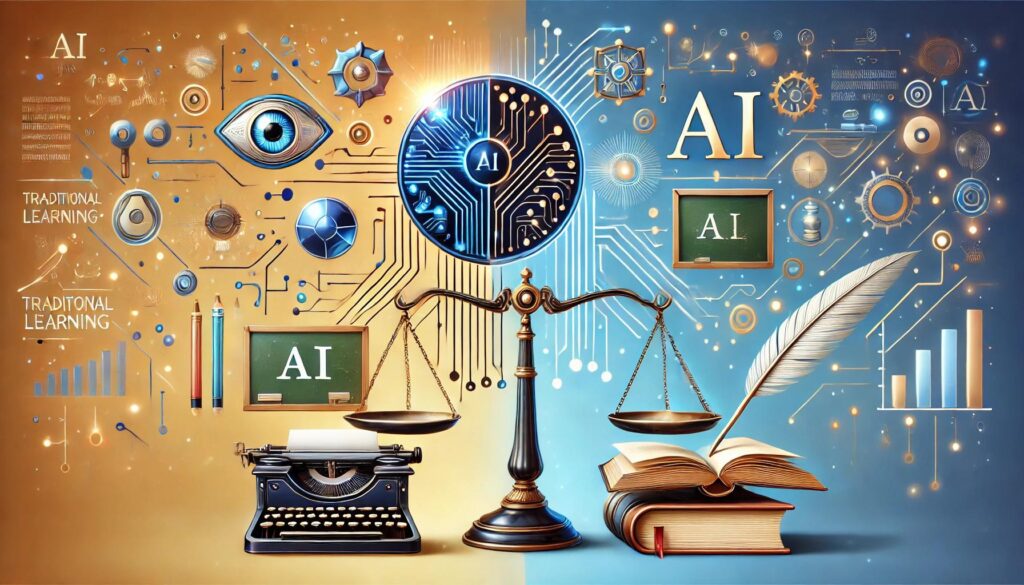
Step 1: Use AI to Understand Difficult Concepts
If you don’t understand a topic in Maths, English, Reasoning, or GK, you can:
- Ask AI to explain the concept in simple language
- Request examples
- Ask for step-by-step solutions
Example:
Instead of searching randomly, ask:
“Explain percentage with examples for SSC exams.”
This saves time and gives clear explanations.
Step 2: Create Smart Study Notes
AI can help you:
- Convert long chapters into short notes
- Make bullet point summaries
- Create quick revision sheets
But always read and edit the notes yourself to ensure accuracy.
Step 3: Generate Practice Questions
You can ask AI to:
- Create MCQs
- Make error spotting questions
- Prepare mock test questions
- Give previous year type questions
This is very useful for SSC, CHSL, MTS, and other government exams.

Step 4: Improve English Grammar & Writing
AI tools can:
- Correct grammar mistakes
- Suggest better vocabulary
- Improve sentence structure
- Explain grammar rules
This is especially helpful for competitive exams and content writing practice.
Step 5: Build a Personalized Study Plan
You can request AI to:
- Create a daily timetable
- Design a 30-day revision plan
- Suggest weekly targets
- Balance subjects based on your strengths and weaknesses
A structured plan increases consistency.
Step 6: Use AI for Quick Revision
Before exams:
- Ask for short revision notes
- Revise formulas
- Review important grammar rules
- Practice quick quizzes
AI can help you revise faster in limited time.
Smart Rules for Using AI
✔ Use AI for understanding, not copying.
✔ Always verify important facts.
✔ Practice questions yourself after learning.
✔ Do not depend completely on AI.
Remember: AI is a tool. Your effort is the real power.
Common Mistakes Students Make While Using AI
❌ Copying answers blindly
❌ Not cross-checking information
❌ Avoiding self-practice
❌ Using AI instead of reading textbooks
AI should increase your efficiency, not reduce your thinking ability.
The Risks of Over-Dependence on AI in Studies
While AI tools are extremely helpful, students must understand that depending completely on AI can be harmful. Like any technology, AI should be used wisely and in moderation.
1. Reduced Critical Thinking Skills
If students rely on AI for every answer, they may stop thinking independently. Competitive exams require logical reasoning, analytical ability, and problem-solving skills. These abilities develop only when students practice thinking on their own.
2. Weak Problem-Solving Ability
Subjects like Mathematics and Reasoning require regular practice. If a student directly looks at AI-generated solutions instead of attempting questions first, their problem-solving speed and confidence may decrease.
3. Lower Retention and Memory Power
Writing notes manually, revising concepts, and solving questions help improve memory. If students only read AI-generated summaries without active learning, their retention power may reduce.
4. Dependency Habit
Overusing AI can create a habit of dependency. Students may start feeling less confident about solving problems independently. This can negatively impact exam performance where external help is not available.
How to Use AI in a Healthy Way
AI should act as a support system, not a replacement for effort.
✔ Try solving questions first, then use AI to check answers.
✔ Use AI to clarify difficult concepts.
✔ Create short revision notes with AI, but review them yourself.
✔ Practice regularly without assistance.
Golden Rule for Students
Think First, Ask Later.
Always attempt to use your own mind before seeking help from AI tools.
Final Thought
AI is neither good nor bad — it depends on how you use it. When used wisely, AI can improve productivity and learning efficiency. But success in exams still depends on discipline, consistency, and self-practice.
Use AI as your assistant, not your substitute.